How To Measure Success For Generative Engine Optimization (GEO)
Answer engines like Google have always been the bridge connecting users with knowledgeable brands, but what is the end goal when generative search platforms seem to prioritize answers over action? Zero-click searches are becoming increasingly common as search gets smarter, synthesizing relevant content into a conversational format to keep the user engaged. Instead of encouraging clicks to relevant websites, AI search engines like ChatGPT and Perplexity answer user questions directly in-platform, leaving little room for brands to stand out. Is this the end of search as we know it, or simply an evolution?
For brands ready to embrace generative engine optimization (GEO), this shift marks an opportunity to redefine what success looks like in your own terms. Establishing KPIs that keep GEO at the center of your brand’s digital strategy sets you up for growth you can track to remain relevant and competitive in this new age.
Redefining Success In The Era Of Generative Search
Success in generative search is less about traditional search rankings and more about reach and visibility. Do AI platforms cite your website in response to user queries? Is your content included in AI Overviews? When AI platforms do cite your brand, is your business portrayed in a positive or negative light?
Unlike standard search engine results pages (SERPs) organized by individual links, the conversational responses in AI platforms provide information upfront to the user. This may translate to fewer clicks to your website, but think about who’s left after an initial answer is provided. These are people who already got the answer to their question, so when they click into your content, they’re highly motivated and seeking further action on your site. Qualified traffic like this is more likely to convert compared to those who visit your site for a quick answer and then exit once they’ve found the fact they’re looking for.
Success may not look the same as AI visibility takes precedence over traditional traffic metrics on these platforms, but there is still success to be had when you incorporate generative engine optimization into your digital marketing strategy.
AI Visibility Is Changing The Game, It’s Time Marketers Change Their Goals
While traditional SERPs with itemized blue links allow users to make their own decision about what content to trust and click into, the answer engine format means AI is deciding for the user. There is no room for error, so generative engines are designed to minimize risk, seeking authoritative content they can trust to satisfy the user’s query. To make your brand visible in these spaces, you have to show bots you’re the expert on a given subject. And to be seen as the expert on a given subject, you have to prove experience, expertise, authoritativeness, and trustworthiness (E-E-A-T), core principles telling bots you’re a reliable source to cite.
So how can you be sure you’re making an impact as a trusted authority in generative search? First, set yourself up for success. GEO traffic won't look the same as organic traffic, so stop using this as your primary indicator of success. Yes, you want users to visit your site, but to achieve AI visibility, you need KPIs aligned with GEO best practices. To make it happen, your goals should center around brand perception, prominence, and competitive positioning in generative search.
3 Foundational GEO KPIs To Track Performance
Generative engine optimization is still evolving, but that doesn't mean you can’t get a good grasp on it now. In addition to clicks and conversions from standard organic search, here are key metrics and expert tips to help you measure success and determine KPIs for your GEO strategy going forward.
Native AI Visibility
Native AI visibility refers to your brand’s prominence in AI platforms that create their own experience outside of traditional search, like ChatGPT, Claude, and Perplexity, to name a few. Because Google’s AI Overview feature is still part of traditional SERPs, it's measured differently. Native AI visibility looks at performance as a cited source within these AI-native platforms. What pages from your site are cited as a source for AI responses? What prompts trigger these citations? How do you fare compared to your competitors?
Look at how your business shows up for prompts specific to your brand and for general prompts relevant to the industry to get a sense of how and when your brand shows up in generative search. Reputation and sentiment, or how your brand is perceived, are other critical components of AI visibility to keep track of.
How To Track AI Visibility
Evaluate AI visibility by running your own prompts through the platforms to see if your brand is cited, or use a third-party monitoring tool to get a more detailed view of your brand visibility. Third-party tracking tools like Peec AI take the guesswork out of your generative engine optimization reporting capabilities, providing data like cross-platform visibility over time, brand sentiment, position in citations, and overall share compared to competitors.
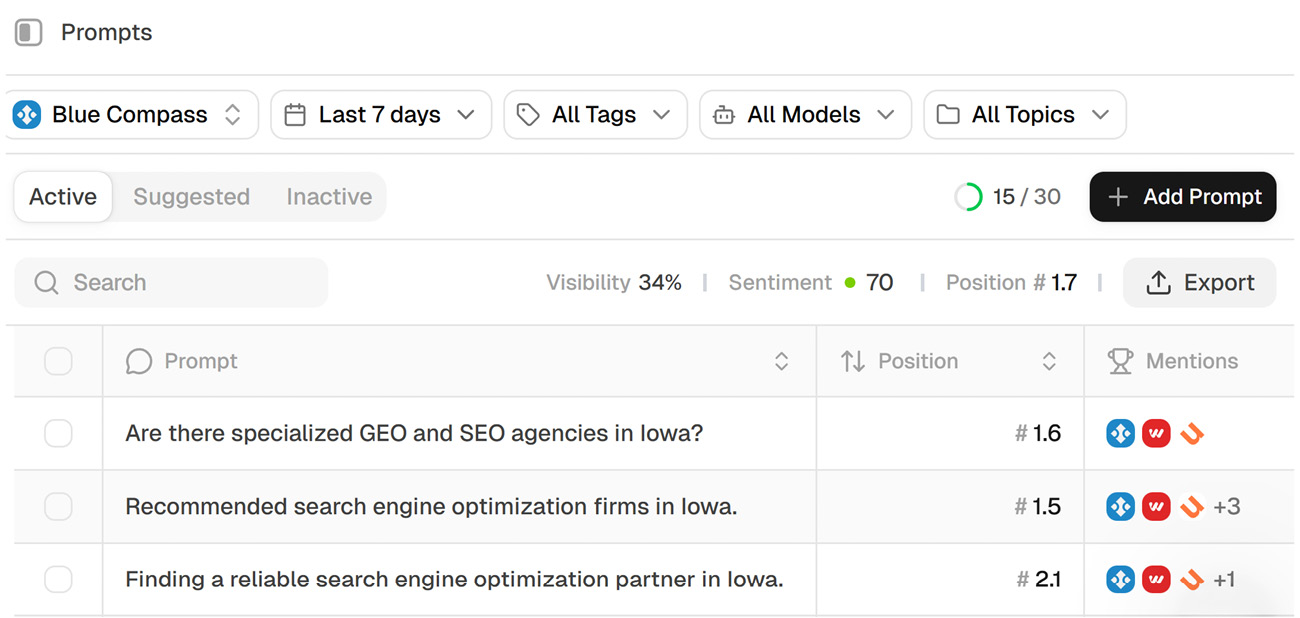
Manual prompt-based monitoring requires prompts you can repeatedly plug into ChatGPT and other platforms to see if your brand is cited for relevant branded and industry queries. Branded prompts especially are a good starting point to see how AI platforms perceive your brand and whether the information they display related to your brand is accurate and positive. Does AI have trouble distinguishing you from another company? Do competitors show up instead of you? Generative engine optimization helps you take control of the narrative so you appear favorably for relevant prompts.
GEO Traffic
Since generative search platforms aim to keep users engaged within the platform, they don’t always direct traffic to your website. However, GEO traffic is worth tracking so you know if users are coming to your site from generative engines and AI-generated overviews. More importantly, how users behave once they get there helps tell a story you can back up with measurable data.
How To Measure GEO Traffic
Google Analytics enables access to a variety of valuable metrics related to GEO-generated traffic and engagement. Create custom reports filtered by specific source/mediums to track referral traffic from sources like Claude, ChatGPT, and Perplexity. This allows you to monitor how long these users stay on your site and what they interact with once there. One potential outcome to expect is a dip in traffic but an increase in engagement and even conversions as GEO drives highly qualified traffic with specific intent to your website.
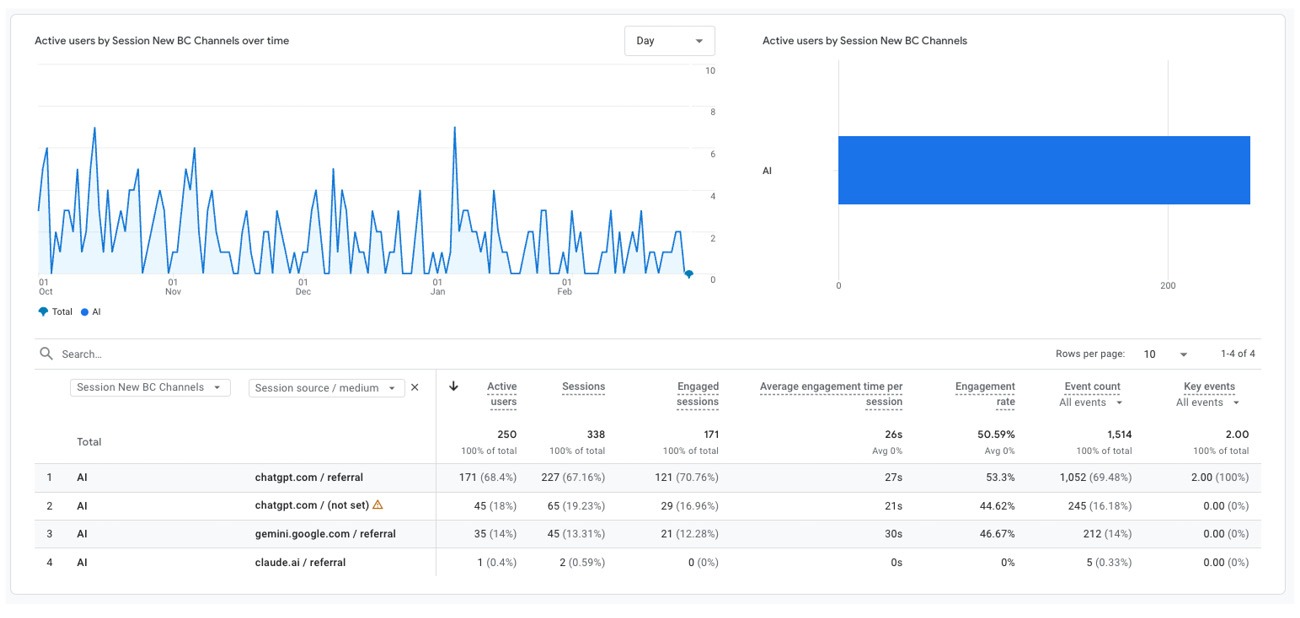
Tracking traffic from Google’s AI Overviews is a bit more complex, as Google Analytics currently lumps this together with other organic traffic that comes from SERPs. This makes it difficult to determine if traffic is coming from traditional search results or from a citation in the AI Overview.
AI Overview Tracking In Traditional Search
Powered by Google Gemini, AI Overviews combine generative search with the traditional search engine experience by displaying AI-generated summaries along with organic results in SERPs. As a result, AI Overview tracking can be challenging without the right tools to distinguish this prominent search feature from other organic traffic. Like with native AI platforms, AI visibility tools offer detailed insight into how your brand shows up in AI Overviews, including relevant keywords, brand references, and source citations.
How To Monitor AI Overview Visibility
Not every query yields an AI Overview in Google, so tracking visibility in this space often involves manual audits of relevant keywords and queries to see if the topic is eligible for an overview. If the query generates an AI Overview, monitor whether or not your brand is referenced in the response or cited as a source. AI visibility tools like Peec AI track how you appear in AI Overviews so you don't have to do it all manually, and keyword tools like SE Ranking also enable a shortcut to see if a keyword has an overview opportunity. Keyword tools also tell you your ranking position in search, which includes whether or not you're prominently featured in the AI Overview position.
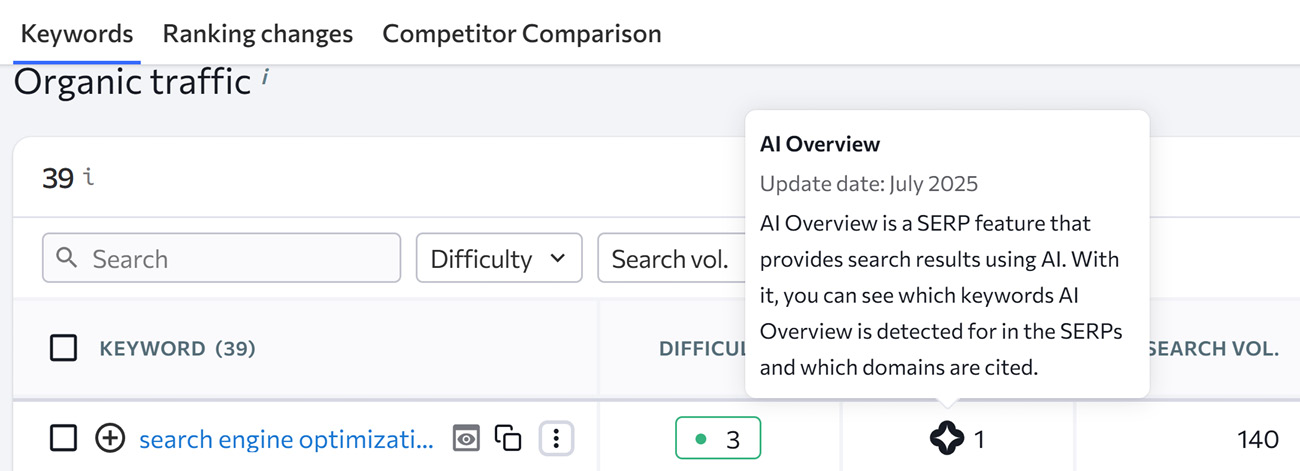
Remember that AI Overviews are part of the zero-click trend taking over generative search, meaning you may lose organic traffic to your site. However, what you gain through visibility in AI Overviews is brand influence, which may be reflected through an increase in the branded keywords you’re ranking for as more people become familiar with your business and search for it directly. Similarly, when traffic does click through to your site, they’re already informed and more motivated to convert compared to someone clicking into your site through a traditional organic result.
Measuring & Reporting GEO Traffic & Reach To Align Business Goals
While AI visibility is the gold standard of generative engine optimization as far as marketers are concerned, visibility isn’t always easily quantifiable to leadership and other decision-makers who determine the marketing budget. To effectively communicate the value of GEO, report on what this visibility enables: brand recognition, qualified leads, and a competitive advantage. AI platforms are increasingly used to aid consumers as they compare brands and narrow down their options. Appeal to business leaders by demonstrating how positioning your brand to succeed in generative search offers a competitive edge establishing your business as an industry leader.

Look at potential GEO KPIs like visibility, conversion rates, and site engagement. This can help you demonstrate the value of working with a more informed, motivated audience aware of your brand. “Share of voice” is another key metric demonstrating how often your brand is cited for relevant queries compared to competitors. As with any marketing strategy, generative engine optimization gives marketers the opportunity to influence brand perception, generate leads, and ultimately drive revenue for the business. That logic is hard to argue!
Contact Blue Compass To Get Started Reaching Your Goals With New GEO KPIs
As AI continues to reshape how users discover brands and make decisions, marketers are in the unique position to redefine what digital success looks like. By shifting expectations to align with this new search behavior, you have the power to establish new KPIs driven by GEO. Our team at Blue Compass is your strategic partner for generative engine optimization strategies, including building GEO reporting frameworks to help you measure the impact of GEO on your brand. Contact us to learn more about how to achieve AI visibility in the new digital landscape.