The AI Search Terminology To Know For GEO & AEO Success
Marketers are all too aware that AI is quickly changing how people search for information. With this shift in search behavior comes an entirely new vocabulary to learn and adapt. For years, SEO success was measured through widely known metrics such as rankings, impressions, and clicks. However, as generative search and AI-driven responses become more common, those traditional signals tell only part of the story.
With the rise of AI platforms like ChatGPT, Gemini, and Perplexity, brands are competing for inclusion inside AI answers themselves instead of ranking positions in search engines. In response, new frameworks, such as generative engine optimization (GEO) and answer engine optimization (AEO) have been developed, along with AI search monitoring tools to measure success. Understanding the terminology behind these performance metrics is essential for marketers who want to stay competitive in the AI search landscape.
The AI Terms & Definitions Marketers Need To Know
As AI-powered search evolves, marketers will see a new set of metrics designed to measure how brands appear inside AI-generated responses. Understanding these terms is critical for marketers adopting GEO strategies. In this changing search landscape, success is increasingly measured by visibility and authority within AI responses rather than traditional search positions. While these AI terms and signals will continue to evolve, we’ve highlighted a few that marketers and brands alike will hear most often.
AI Visibility
Visibility in AI is one of the most important metrics for brands when measuring GEO and AEO success. AI visibility refers to how often your brand appears in AI-generated responses in relevant search queries.
For marketing professionals, visibility is a foundational metric for understanding overall AI presence. Monitoring AI visibility helps you identify whether your content is being recognized and included in AI responses when users ask questions about your brand or industry.
AI Authority
Authority is a historically important element for SEO best practices, even appearing as a factor within the content creation framework, E-E-A-T. Compared to traditional SEO, authority is even more of a critical factor when optimizing for GEO. AI authority refers to how strongly AI systems associate your brand as an expert on specific topics.
When a brand consistently appears in AI responses about a particular subject, AI models begin to recognize it as a reliable source of information. Strong authority signals come from a variety of SEO tactics including well-structured content, reputable backlinks, and consistent topical coverage. Both earned and owned media play a role in building authority and strengthening your brand’s AI visibility. This is one of the reasons marketers invested in GEO strategies are focusing on comprehensive content across the digital landscape rather than individual webpages.
AI Sentiment
We’ve outlined why it's important to be visible in AI, but being able to measure how your brand is viewed and portrayed is also a valuable metric for marketers to track. AI sentiment measures the tone used when AI systems describe your brand. Rather than simply tracking mentions, this metric analyzes whether AI responses portray your brand positively, neutrally, or negatively.
For brands, sentiment is critical because AI responses increasingly shape a potential customer's first impressions. When users ask AI platforms for recommendations or comparisons, the tone used to describe your brand can influence whether users trust or consider your business.
AI Position
In traditional SEO, position refers to where your website is displayed on a search engine results page (SERP). Similar to traditional search, position reflects your website’s prominence within the AI answer itself. While exact formats vary between platforms, AI tools often evaluate whether a brand appears early in a response, within citations, or later in the generated content. Position can also vary by topic, revealing where your brand demonstrates stronger expertise and where additional content development may be needed. Tracking AI position helps you to understand how prominently your brand is featured when AI systems present information to users.
AI Citations
For a brand, being cited, or referenced, in AI systems as a source is one of the core metrics to track when thinking about measuring GEO success. In generative search, AI models often rely on external sources to construct answers. When your website is cited as a reference, it signals that the content is considered trustworthy and authoritative. These citations help reinforce brand credibility and increase the likelihood that your information is used in future responses.
AI Share Of Voice
Share of voice is a measurement of how often your brand appears in AI responses compared to competitors. This metric represents the percentage of relevant AI-generated responses that mention your brand across a defined set of queries. For example, if Hubspot’s share of voice tool evaluates 100 prompts and your brand appears in 40 of them, your share of voice would be approximately 40 percent. Tracking share of voice helps you to understand your brand’s competitive presence within AI search environments and identify which of your competitors dominate AI conversations.
AI Inclusion Rate
While share of voice compares brands against competitors, inclusion rate focuses on whether your brand appears at all when users ask specific questions or prompts. A low inclusion rate can signal that AI systems do not yet recognize your content as relevant for key topics, which might mean you need to strengthen your authority in that particular area. Tracking inclusion rate is critical for identifying gaps in coverage and opportunities to expand your website’s content strategies to improve visibility within AI responses.
AI Search Monitoring & Measuring GEO Success
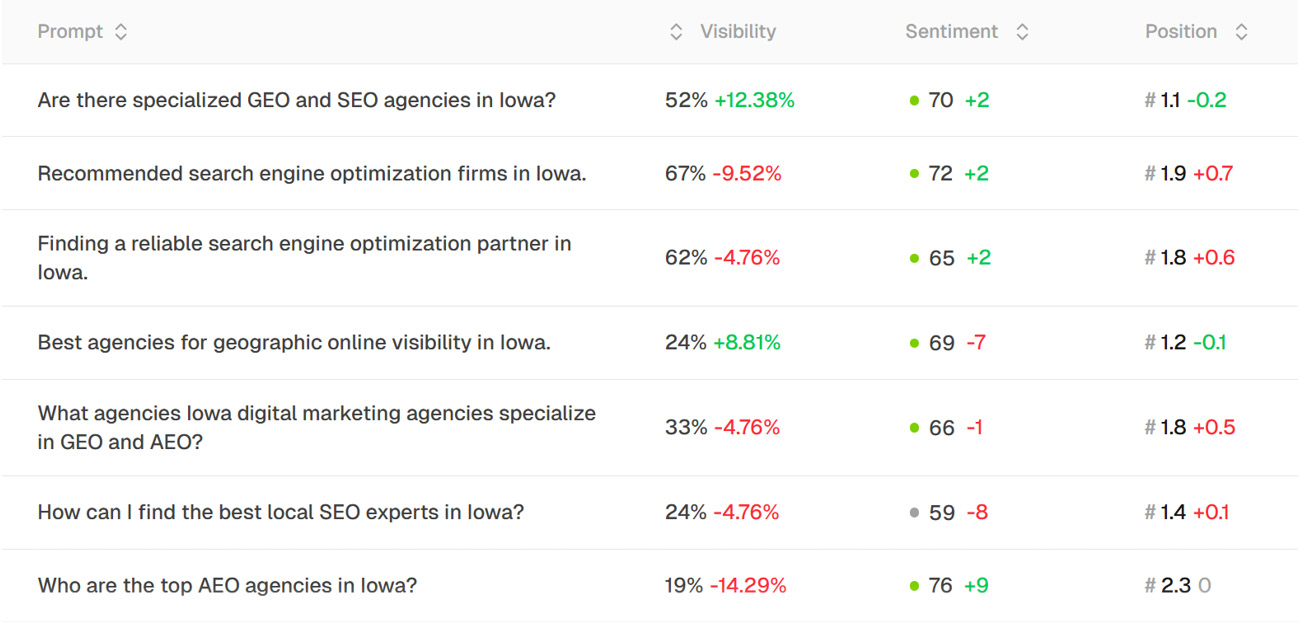
Now that you’re more familiar with AI search terminology, how do you start to measure and track your brand's success? The solution that many established marketing tools have started to roll out is AI search monitoring, or prompt-based monitoring. These tools track how brands appear in generative responses across platforms like ChatGPT, Gemini, and Perplexity, then analyze how AI systems respond.
Instead of measuring only rankings and clicks, AI search monitoring tools evaluate many of the metrics we have covered such as brand visibility, sentiment, citations, positioning, and share of voice. These insights help you understand how AI platforms display your brand and whether that narrative aligns with your overall messaging and expertise.
How Does Prompt-Based Monitoring Work?
Prompt-based monitoring tools track brand visibility by running sets of predefined queries across AI platforms and analyzing the responses. Each AI-generated answer becomes a data point used to evaluate brand mentions, citations, and positioning.
AI monitoring platforms like Peec AI use these responses to form the foundation of the metrics used to measure your site’s AI discoverability and performance. By tracking prompts regularly, you can clearly see how your brand appears in AI responses and how that presence changes over time as new content is published or competitors enter the landscape.
The Future Of AI Search Terminology & AI Search Metrics
The rise of generative search is reshaping how success is defined and measured for brands across all industries. As the search landscape evolves, AI search metrics like visibility, citations, share of voice, and sentiment are becoming just as important as rankings and traffic.
Understanding and utilizing these new metrics is a necessary step toward understanding how AI platforms display your brand online. Embracing them will position you to influence how AI answers questions within your industry ahead of your competitors.
At Blue Compass, we help businesses navigate the evolving world of AI search through data-driven GEO and AEO strategies. Connect with us to stay ahead of how AI is shaping search and what it means for your brand’s visibility.