May 8, 2026
Drew Harden
SEODigital MarketingWeb DevelopmentGEO
Website Traffic Down In The AI Era? Here’s How To Thrive
Are you concerned your website visits could vanish?
Many publishers, content creators, and website owners are reporting a potential new reality: decreasing website visits.
The culprit? Generative AI platforms.
In this article, we’ll explore the traffic losses some websites are facing right now and why declining traffic can actually be a hidden opportunity for your website if you handle it correctly.
Are Website Visits Falling Because Of Generative AI?
While a number of websites have seen a decline in traffic over the last year, the reality is that most websites haven’t experienced a significant drop.
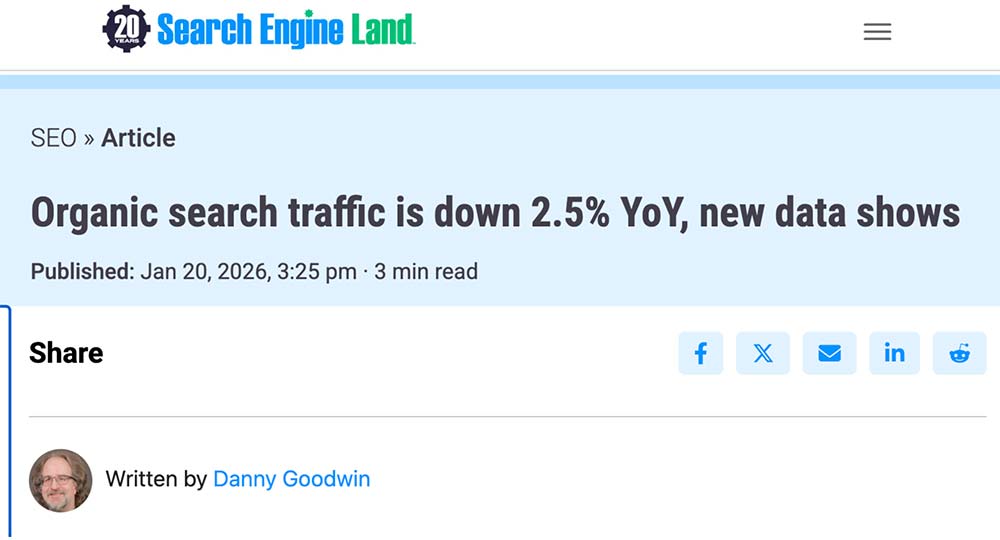
A recent analysis of over 40,000 U.S. websites showed organic search traffic down only 2.5% year-over-year in 2025. While technically a decline, this challenges the extreme claims of the death of the website visit. In fact, traffic for many larger websites grew, while smaller sites saw more declines.
Our Own Case Study: AI Impact On Website Traffic
At Blue Compass, we've designed and developed hundreds of websites that we actively monitor. To get a clearer picture, we recently analyzed traffic data from a diverse set of client websites spanning both B2B and B2C sectors across multiple industries. We compared 90 days in 2025 to the same period in 2026.
The results are much more positive than what most marketers have been hearing: 61% of the websites saw an increase in active users, while 55% experienced growth in sessions. About 9% saw essentially no change in active users, while 30% of sites reported a decline.
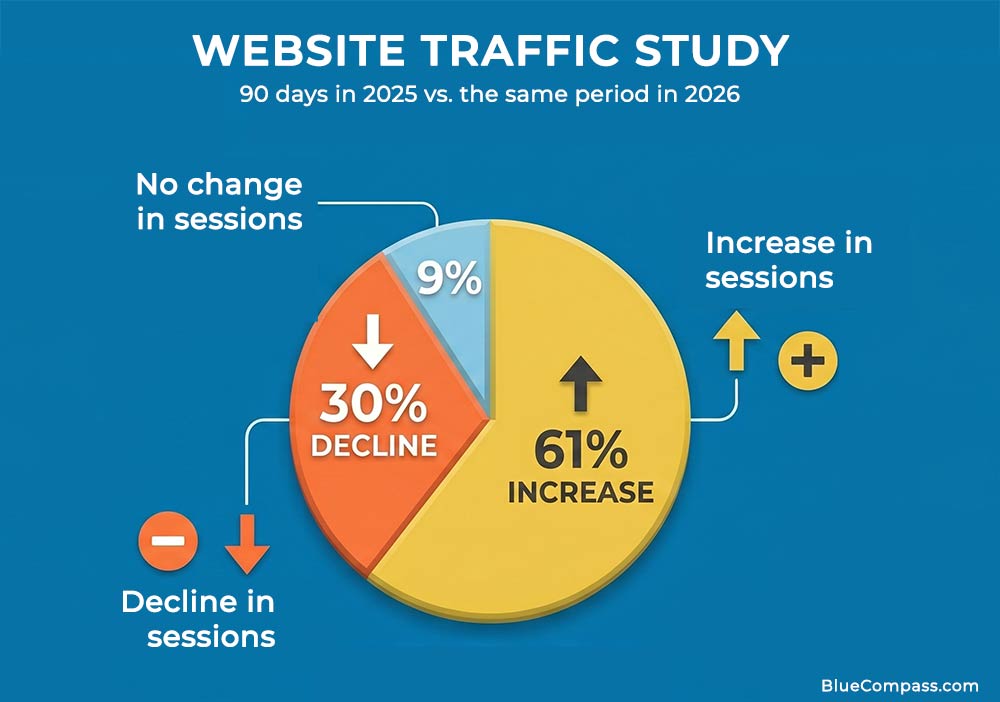
This data reinforces that traffic trends remain mixed rather than universally declining in the AI era.
Several websites achieved impressive gains that more than offset any losses elsewhere. A university website led with a 59% increase in active users, followed closely by a company in the services industry at 54%.
Other notable performers included websites for companies in the healthcare, finance, banking, logistics, industrial services, biofuel, and education sectors, all posting positive growth, demonstrating that momentum is not limited to any single industry. Enterprise and B2B-focused sites, particularly in healthcare, logistics, and manufacturing, proved especially strong.
Changes in users and sessions generally moved in tandem across websites. The university client, for instance, saw a 59% increase in active users alongside a 40% increase in sessions.
This indicates these are genuine traffic shifts rather than fluctuations in engagement.
These sites often rely on informational search and long-tail queries, which appear less vulnerable to AI disruption.
A similar recent study from Hubspot shows 43 percent of websites have increased sessions vs. a year ago..
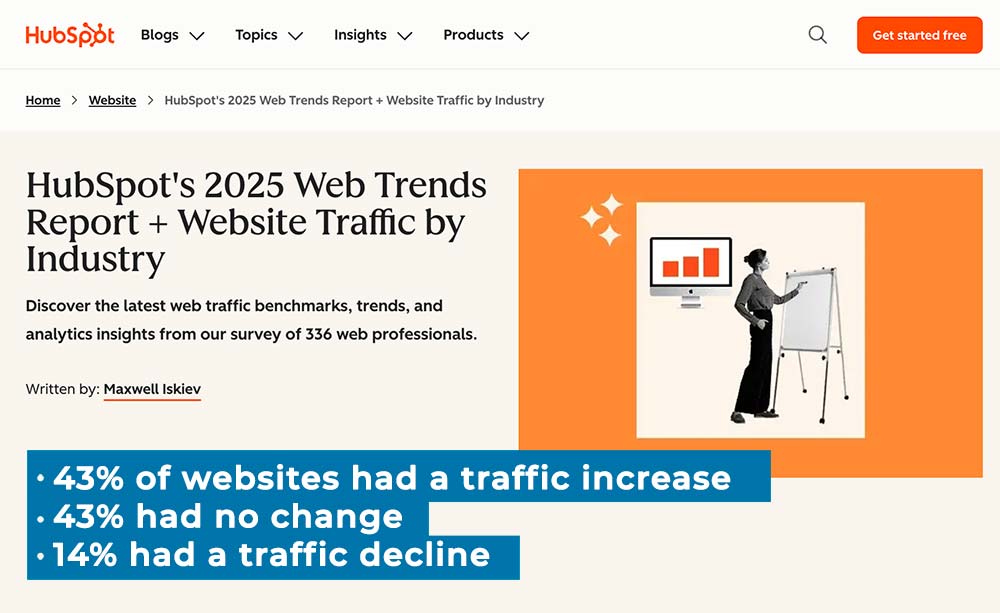
These findings show that smart digital strategies continue to deliver results even as search behaviors evolve.
Certain Industries Are Experiencing Major Website Traffic Drops
While the impact of large language models (LLM) on most websites’ traffic is not significant yet, certain websites are seeing a substantial impact. For instance, publishers saw a 20% to 40% drop in traffic in 2025. CNN experienced a 30% drop, while Business Insider and HuffPost reported a 40% decrease in traffic.
Our team recently attended Affiliate Summit West, the leading conference for publishers and affiliate marketers who rely on website traffic as the foundation of their business. Declining traffic was one of the most discussed topics, both among attendees and speakers. The industry is now scrambling to adapt and find sustainable new ways to monetize its brands in the face of the AI boom.
Other industries seeing declines in website sessions include travel, tourism, and ecommerce. For instance, travel website sessions are down 20% year over year.
While some trumpet a global decline in website sessions, the truth is that traffic fluctuations caused by generative AI can’t be broadly generalized across all websites. The impact varies by industry and the type of information a website provides.
Of course, a more significant decline could be on the horizon if the usage of generative AI platforms continues to grow.
Why Generative AI Is Challenging Traditional Content Strategy
The rise of AI has sparked widespread concern among many marketers and creators who invest significant time and resources into producing high-quality content. Indeed, it is disheartening to have platforms like ChatGPT, Google AI Overviews, and Claude surface your well-crafted content and present it as their own.
The era of “build it and they will come” is being challenged. For decades, the inbound marketing playbook was simple: publish high-quality content and wait for the traffic to arrive. Now, LLMs are intercepting that traffic, turning your website into a data source for AI.
Today, users can get answers without ever clicking through to the original source, leading to “zero-click searches” that satisfy queries on the AI platform itself. Studies from 2025 show organic click-through rates (CTR) drop by as much as 61% when Google’s AI Overviews appear.
How Declining Website Traffic Can Boost The Quality Of Your Sessions
While a decrease in website sessions may be troubling, the good news is that AI-filtered website traffic can lead to higher-quality visits.
When someone arrives on your website from an LLM, that person typically has higher intent to engage with your brand than visitors from most other channels.
For example, if someone visits ChatGPT and asks a question, their intent is usually to stay on the platform and get an answer. If your content is featured in ChatGPT’s response and it’s compelling enough for the user to click through to your website, that signals strong interest in your content and, likely, your product, service, or brand.
This type of visitor typically spends more time on your site, explores more pages, and converts at higher rates than traffic from direct visits, social media or even traditional search.
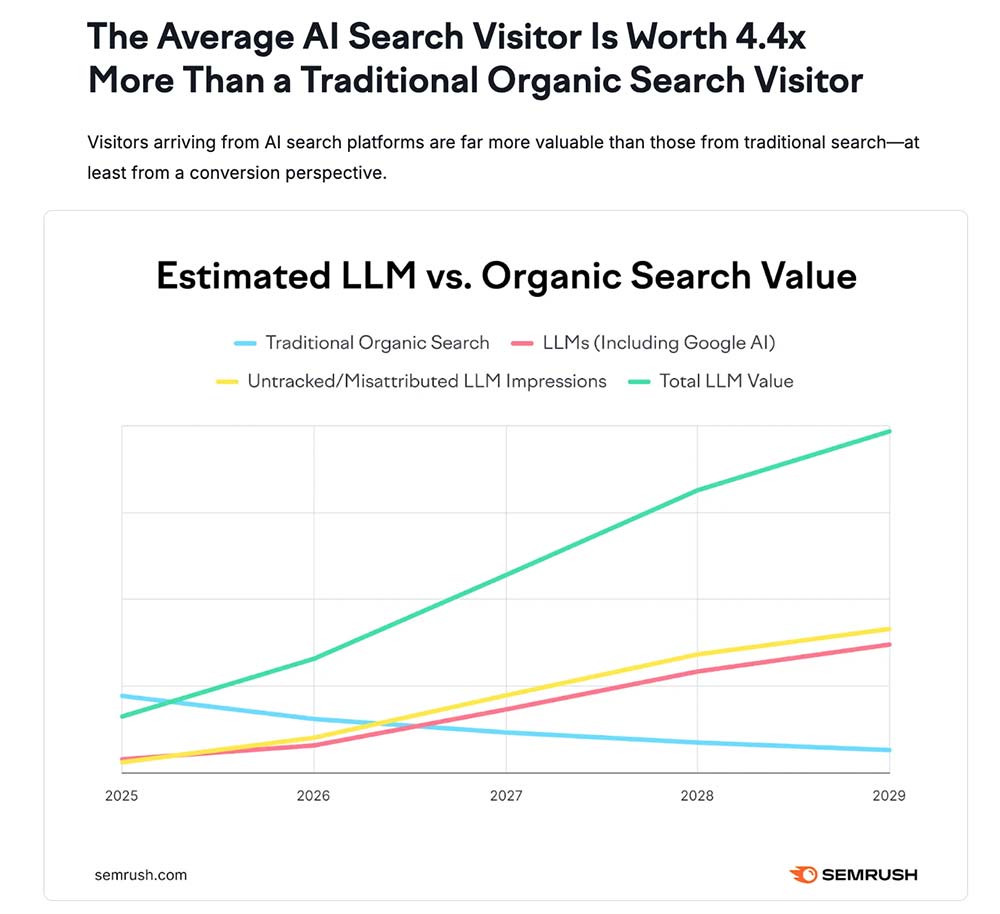
In fact, a recent SEMrush study shows that website traffic from generative AI platforms is 4.4x more likely to convert.
Another recent study by Microsoft found that website traffic from AI sources converts at three times the rate of other channels.
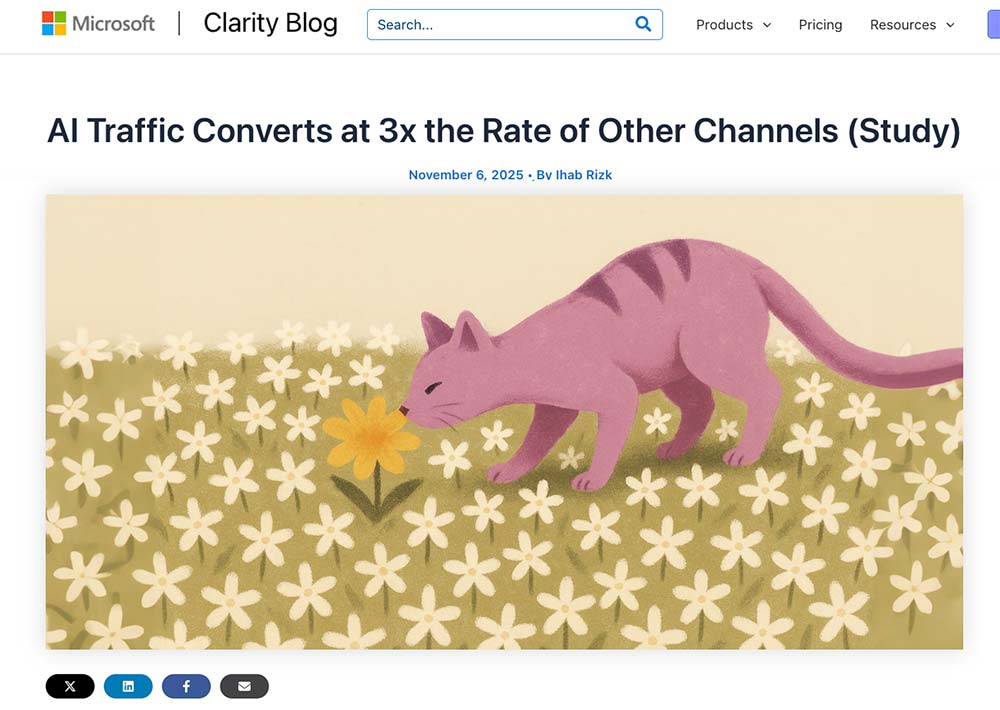
This aligns with what our team is seeing. While AI platforms may not generate a large volume of website sessions, the traffic they do drive is exceptionally high quality, with longer sessions, more pages visited, and higher conversion rates.
How To Combat Declining Website Visits Caused By AI Platforms
The best way to ensure your website attracts valuable sessions in an AI age is to focus on three things: modern SEO, generative engine optimization (GEO), and high-quality on-page experiences.
Here are a few guidelines that we’ve seen be extremely successful across our clients’ websites:
- Create high-quality, original content that follows Google’s E-E-A-T guidelines
- Highlight your team members’ expertise through citations, author bios, and original insights that AI systems value for credibility
- Ensure your website is modern, easy-to-use, and fast-loading
- Add schema markup to each page, or at least your high-priority pages
- Provide direct, concise answers early in article pages
- Limit your website’s usage of JavaScript, as generative AI platforms can struggle to retrieve content from it
Check out this blog for comprehensive guidelines for boosting high-quality traffic to your website. Need a professional hand? Reach out to our digital marketing team for a full marketing strategy.
Will Website Traffic Continue To Decline Because Of Platforms Like ChatGPT?
While it’s reasonable to assume website traffic could continue to decline because of AI, that trajectory is far from set in stone. Legal pushbacks could begin to limit the amount of content displayed by generative AI. In fact, platforms like Google’s AI Overviews and ChatGPT have been the targets of multiple high-profile lawsuits in recent years.
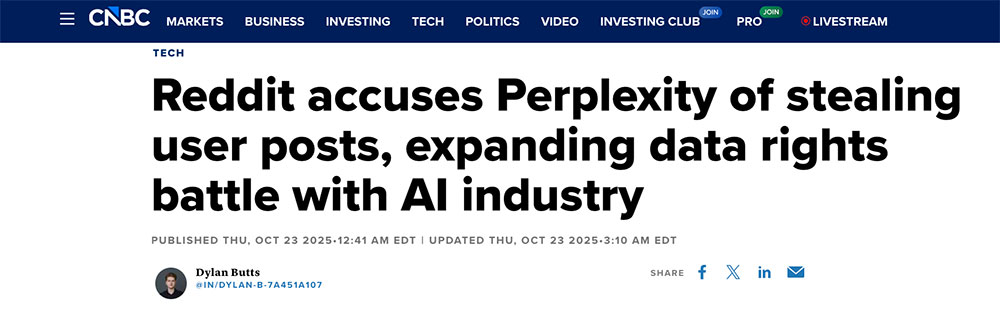
In 2025, for instance, Reddit sued Perplexity AI, accusing it of "industrial-scale" scraping of user posts. Other outlets, including the Chicago Tribune, The New York Times, Encyclopaedia Britannica, and Merriam-Webster, have joined similar actions against AI platforms. Ongoing cases against OpenAI and others continue to challenge the legality of uncompensated data scraping.
Is Pay-Per-Crawl The Future For Website Content?
In recent years, a new model has emerged to help publishers monetize their content while taking control back from generative AI platforms: pay-per-crawl. Although it remains unproven and far from mainstream, it could represent a major shift in the future of web content.
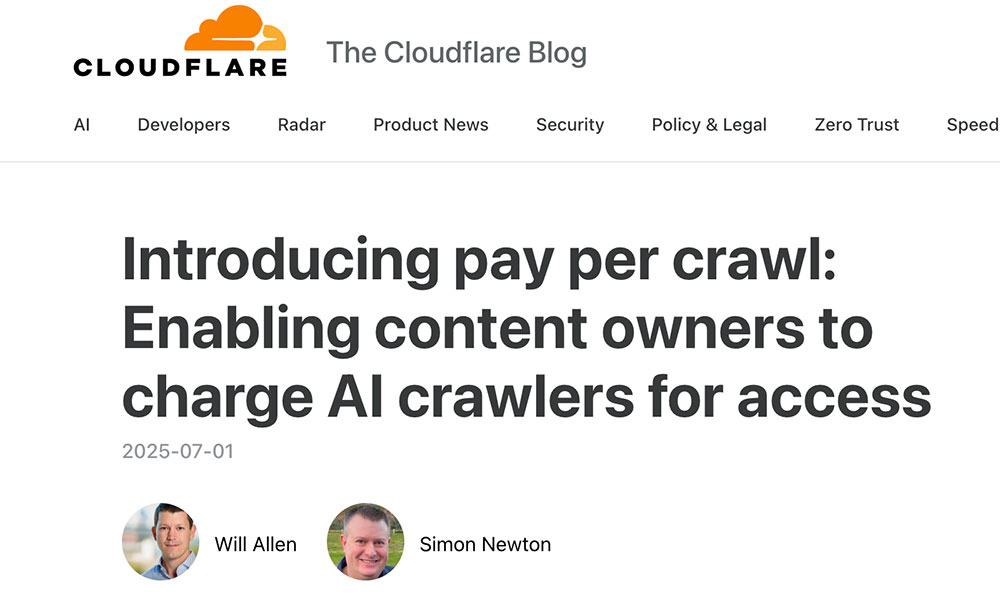
A great example of this model is Cloudflare’s new "Pay Per Crawl" feature, which allows website owners to charge AI crawlers for access to their content. As one of the internet's major infrastructure providers, Cloudflare's move could influence other organizations, giving content creators more leverage over AI platforms.
Another example of this approach is Substack, the popular content subscription service which has seen significant growth in recent years.
Adapt To AI Change With A Resilient Website And Marketing Strategy
The big takeaway? Don't overreact to slight decreases in traffic. The audience finding your website today is often more valuable than the broader, lower-intent traffic of the pre-AI era.
Your website is more important than ever because it’s now more than a destination, it's a broadcast hub. Your content reaches far beyond your direct visitors, getting discovered, cited, and summarized across Google, ChatGPT, Perplexity AI, and other generative AI platforms. Unlike third-party sites, your owned domain is the one asset no one can take away.
Need a hand with a modern website and digital marketing strategy that will thrive in the age of AI? Reach out to us for a conversation!