Current Trends In AI: Iowa's Usage Statistics In 2026
Since OpenAI's ChatGPT became widely available in November of 2022, AI adoption has become the new norm impacting how individuals and businesses execute everyday tasks. But just how widespread is AI? Our team at Blue Compass decided to test the waters in Iowa, our home state, to determine whether the public opinion of AI is leaning toward all-in or not interested.
What we found? You can’t spell Iowa without "A I." Based on a representative survey of 385 adults in Iowa completed in April 2026, usage statistics for AI reflect an increasing reliance on generative platforms like ChatGPT and Google's Gemini. The majority of users engage with these platforms every week, if not every day. If the current trends in AI are any indication, the tech isn't slowing down, meaning marketers need to keep up to stay relevant in the spaces users are most active in.
Measuring AI Adoption & Consumer Opinion Across Iowa
Widespread AI adoption means fewer people are turning to traditional search engines to get answers. Generative AI engines keep users engaged in-platform by simulating a conversation with the user, anticipating follow-up questions and serving as a sounding board for brainstorming and ideas.
To get your content in front of your target audience, your website must be primed to earn a citation in generative results. This process, known as generative engine optimization (GEO), helps AI bots to pull snippets of your content in response to a user prompt. In this new age of search, visibility is up for grabs, and the best businesses will adjust their digital marketing strategies accordingly to gain traction.
Who Uses AI in Iowa?
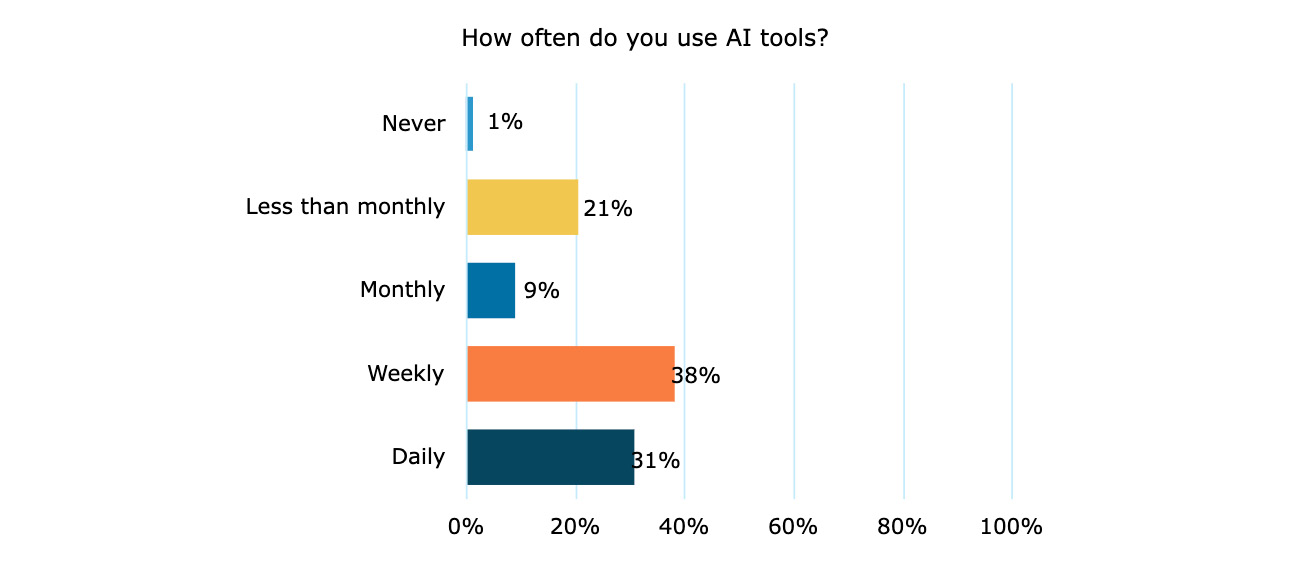
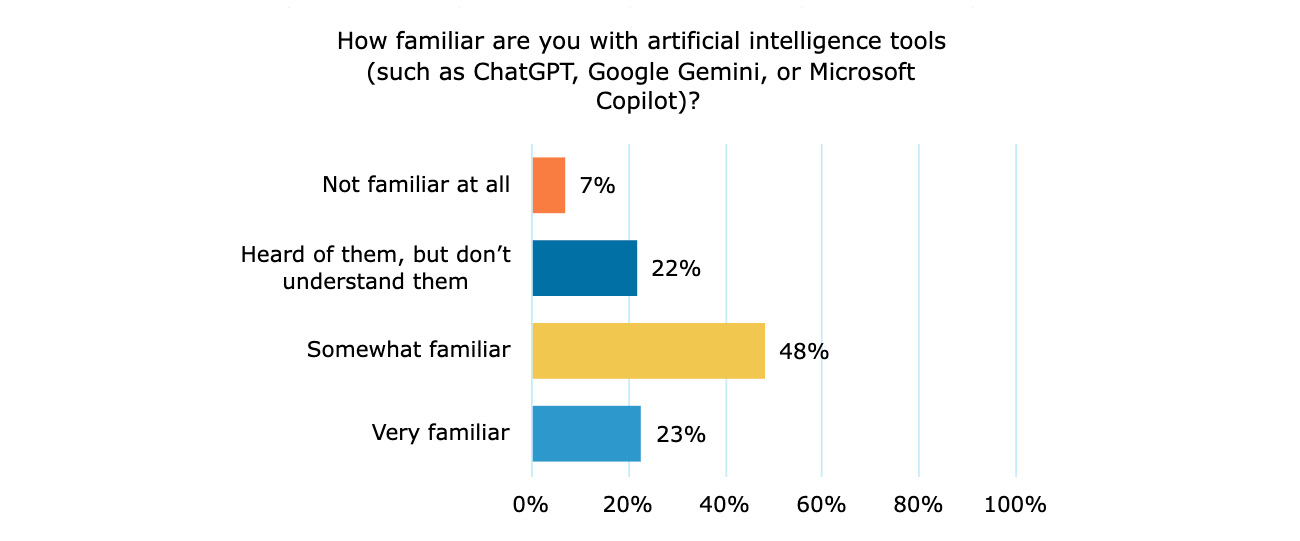
Of the adults we surveyed, 81% report using at least one AI tool, and 69% of AI users report frequent (daily or weekly) usage. Mid-career Iowans aged 35-44 have the highest percentage of daily usage, while younger users aged 18-34 lead in consistent use week over week. Only 7% say they are unfamiliar with AI. These numbers illustrate how prominent AI adoption has become in the past couple years, with platforms like ChatGPT serving as a mainstream tool to satisfy a variety of user queries.
How Do People Use AI?
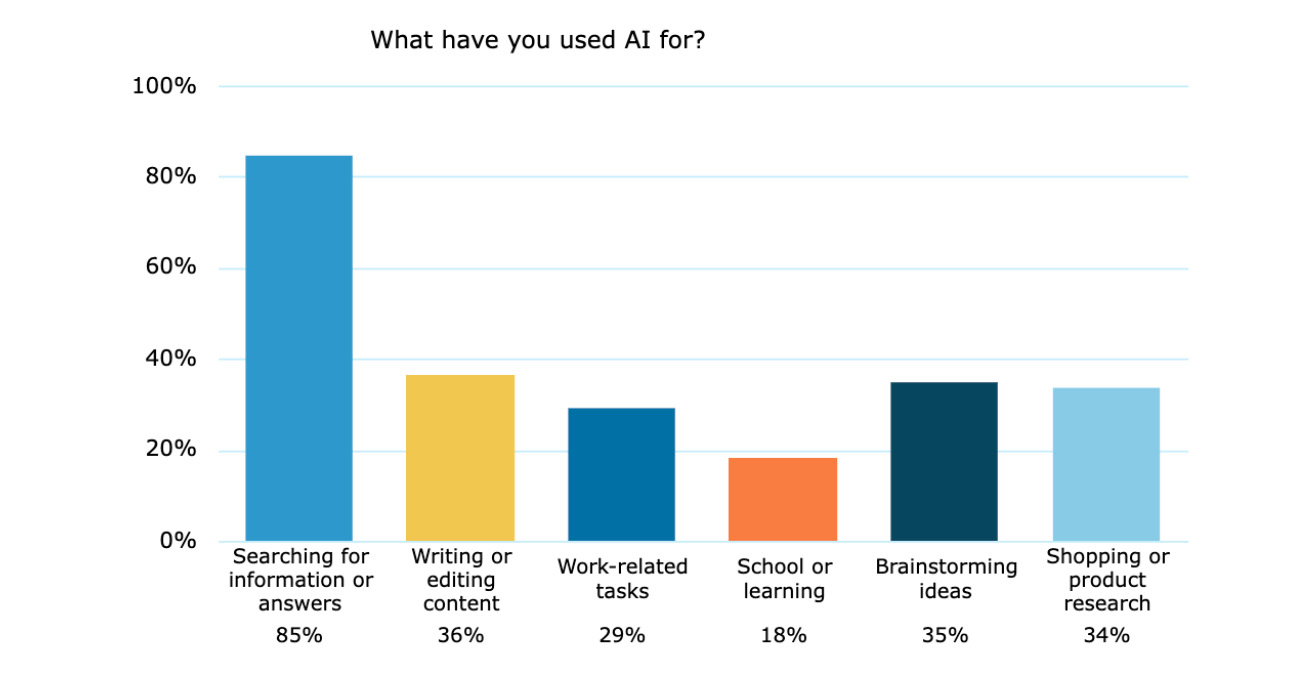
Current trends in AI indicate the platforms are popular for both personal and professional use, with 85% of Iowans using AI tools to find answers or information and 29% reporting usage directly for work-related tasks. A particularly noteworthy finding for marketers is that more than ⅓ of users utilize AI for shopping or product research. These AI usage statistics highlight the futility of ignoring AI. Whether targeting a B2B or B2C audience, widespread AI adoption has made it critical to adapt to continue reaching shifting audiences.
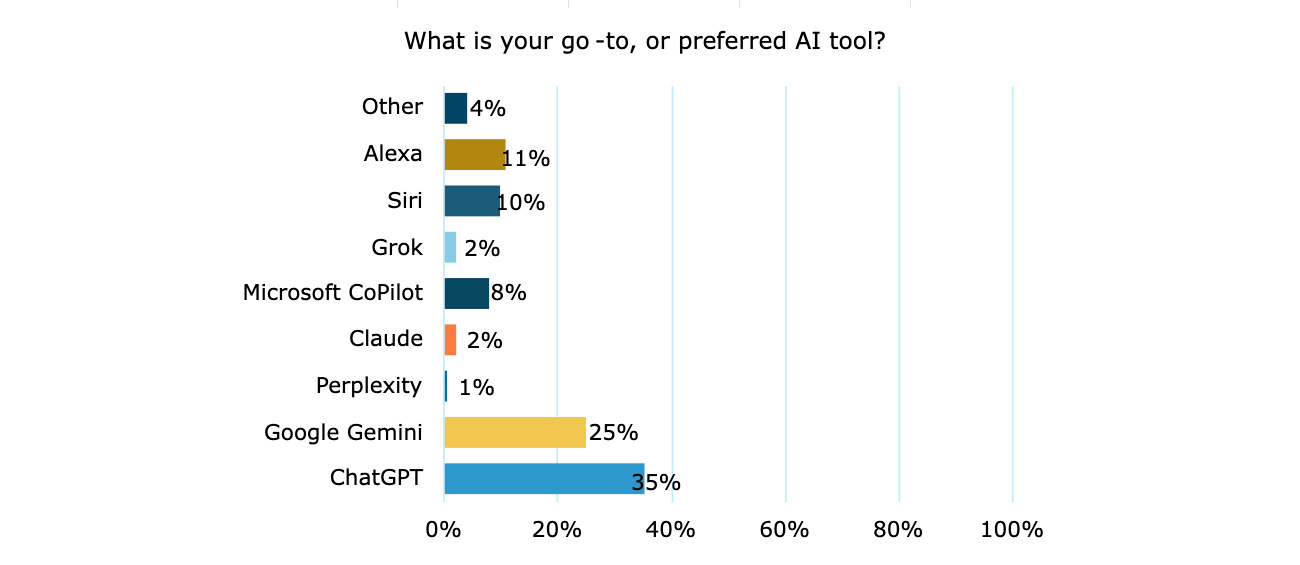
Users are clearly keeping busy with AI technology, but where does the magic happen? Two platforms dominate user preference, with 51% of users reportedly using ChatGPT and 35% citing ChatGPT as their preferred tool. Google’s Gemini follows closely behind as the preferred tool of 25% of users. Also in Google’s camp, 70% of users report being aware of AI-generated summaries known as AI Overviews appearing in Google results. Both independent and in-platform generative search experiences have taken off in the public eye, meaning marketers have a lot of eyes to get in front of.
Do People Trust AI?
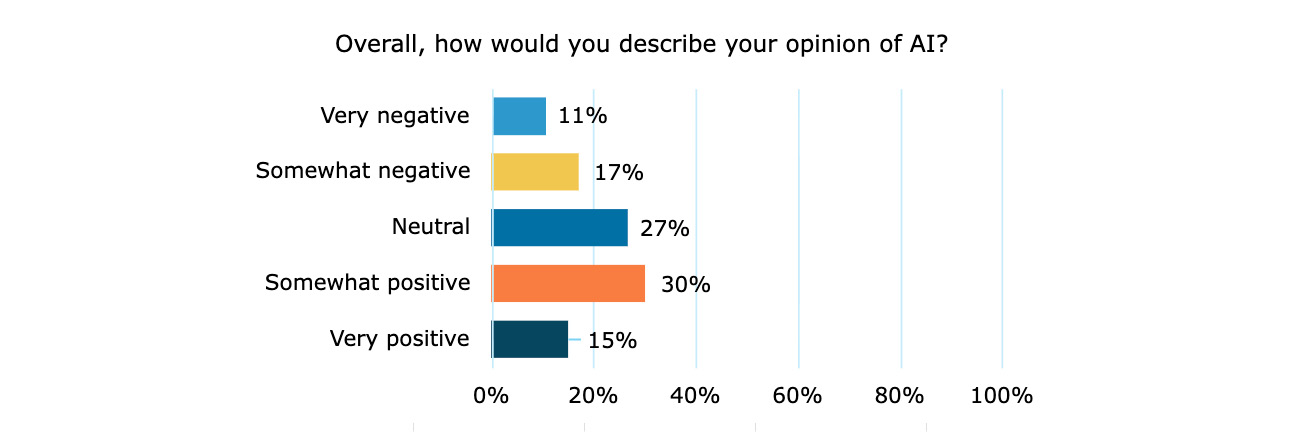
AI in public opinion is still evolving as the technology is relatively new, but 45% report they have a positive opinion toward AI out of the gates. This is compared to 27% who have a neutral opinion and 28% who maintain a negative view. Compared to search engines, however, more than half trust AI about the same as they trust search engines, which have been widely used since the turn of the 21st century. And 11% consider AI more reliable than search engines. Current trends in AI indicate early trust, with more favorable opinions including:
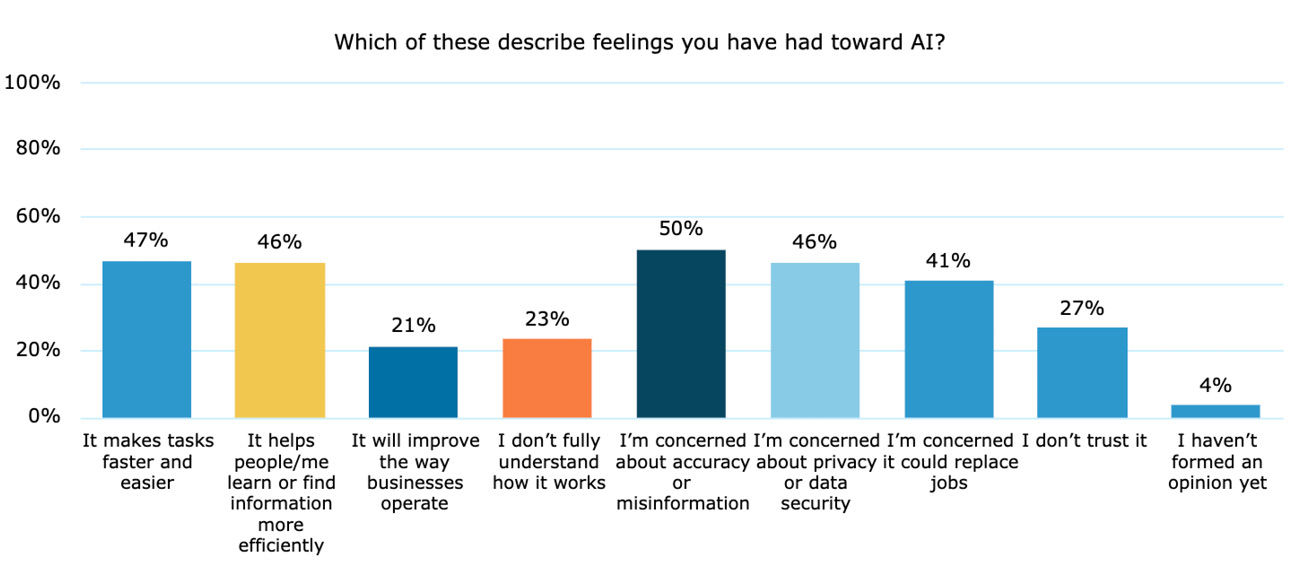
- 47% say it makes tasks faster and easier
- 46% say it helps to learn or find information more efficiently
- 21% say it will improve the way businesses operate
With the general consensus being that AI is useful and comparable to using a search engine, the benefit of GEO for marketers becomes even more apparent: GEO is essential to stay relevant in this new era of search and information. Still, blind trust isn't in anyone's best interest, and the early days of any technological advancement tend to be marked with uncertainty. Today, 27% report not trusting AI altogether for a myriad of reasons.
Lingering Concerns Remain About Artificial Intelligence Despite Widespread Usage
While initial concerns about artificial intelligence don’t appear to be slowing it down, skepticism continues to have a hold of many users. Half of the AI users surveyed in Iowa are concerned about misinformation and accuracy, and another 46% worry about privacy and data security. A lot of AI is still uncharted territory, so some degree of concern is to be expected, but we found these fears don’t dominate the overall public opinion of AI. In fact, the majority of users anticipate relying on AI even more in the future.
What's Next For AI Adoption?
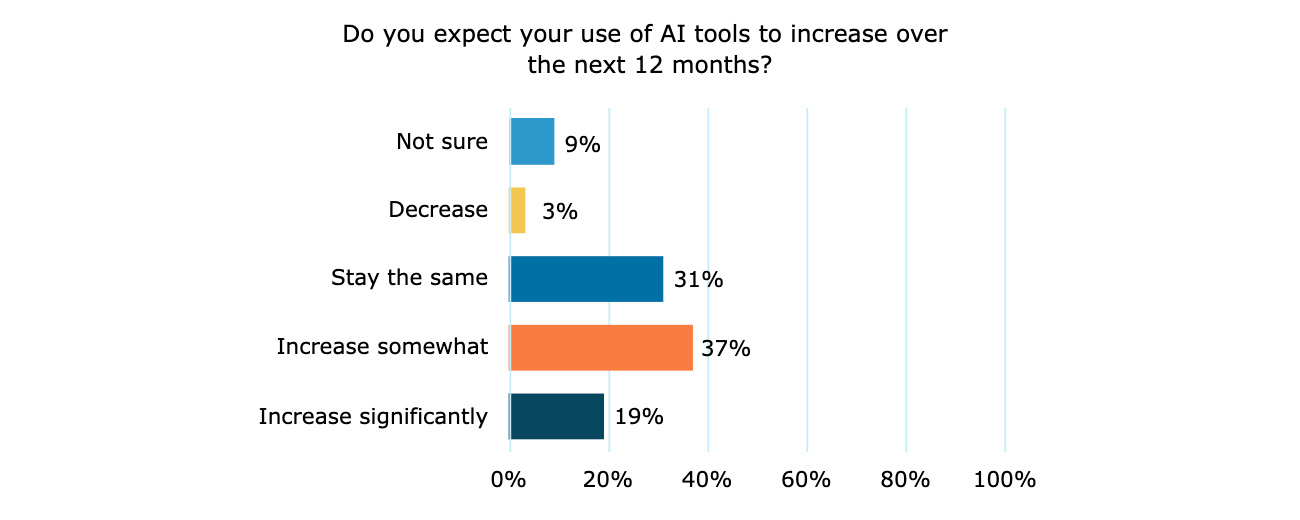
As marketers in this day and age, we're lucky enough to witness AI adoption in real-time. We have the power to directly shape how these new generative spaces influence users, a fact ChatGPT made clear by officially introducing ads to the platform in May 2026. Whether priming content for GEO or purchasing ads for a paid presence in ChatGPT and future iterations of AI ads platforms, getting ahead in the new digital era means experimenting and adapting to new trends as they emerge. Over the next year, 56% of Iowans claim they expect their use of AI will increase, while 31% predict similar usage patterns to their current habits. Nearly every single user is ready to amplify the role of AI in daily life, which means marketers must be ready to step up their game, too.
Blue Compass Is On Top Of Current Trends In AI In 2026 & Beyond
Did any of our results shock you? Are you curious what these AI usage statistics mean for your digital strategies in 2026 and beyond? Our team at Blue Compass wasn't surprised by the results we collected because they reflect the trends we see in our work every day. AI adoption may be in its infancy, but it is here to stay. If you're ready to get started with GEO or want more information about our survey results, contact us today!